
Most grading problems surface too late: in samples, in production, in returns.
We catch them before you cut fabric.
Nabla Labs validates your existing graded patterns against a body distribution that matches your real customer base, and returns corrected DXF where grading breaks — upstream of sampling, before production.
Problem
Sizing problems that
are hard to see on paper.
The brands with the highest fit-related returns rarely have a factory problem or a grader problem. They have a grading visibility problem, one that compounds quietly across sample rounds and retail returns before it shows in the numbers.
Inconsistent fit across the size run.
Fit decisions today rely on one fit model and one or two samples. Edge sizes, extended sizes, and shape diversity within a demographic stay untested until customers complain.
Returns and repeat sampling.
Grading errors set in motion months before production show up in sample rounds, retail returns, and repeated fit sessions — long after they can be fixed cheaply.
Single Fit Model
One body validates base size
Static Grade Rules
Same rule applied across all sizes
Size range output
Differentiation
What downstream tools can't see,
and where the problem actually lives.
Size recommendation, virtual try-on, and fit advisor tools work downstream — they help a customer cope with fit issues the product already has. The fit problem they're managing was created months earlier, inside the grade rules. Nabla Labs works at that earlier stage. Same starting point as your existing fit work: your body standards, your size charts. Different unit of analysis: a population, not a point.
Traditional fit standards define a representative body per demographic. Pattern is graded against that one body. Useful for setting brand‑level fit identity. Limited when customer shape diversity matters.
We extend body standards with body distributions. Same starting point: your existing fit standards, your size charts. Different unit of analysis: a population, not a point.
How it works
How it works.
You send a graded DXF/CAD pattern set and a description of your target customer. Nabla Labs runs a closed-loop simulation across a population of bodies that match that customer, identifies where grading breaks at each size, and returns a diagnostic report and an adjusted DXF.
Ingest
Existing DXF/CAD pattern files and grading specs. No re-modelling, no 3D-design seat.
Analyse
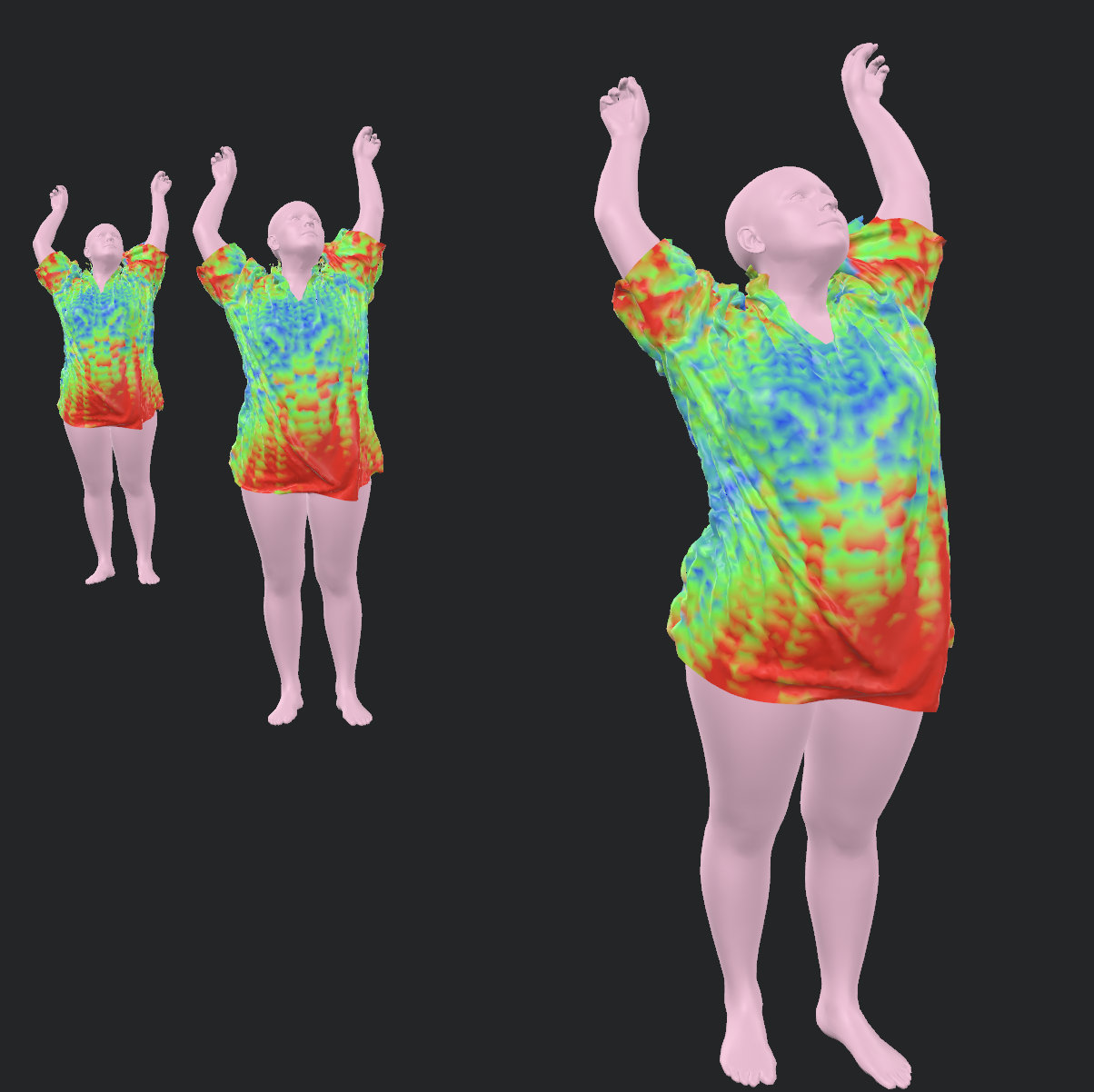
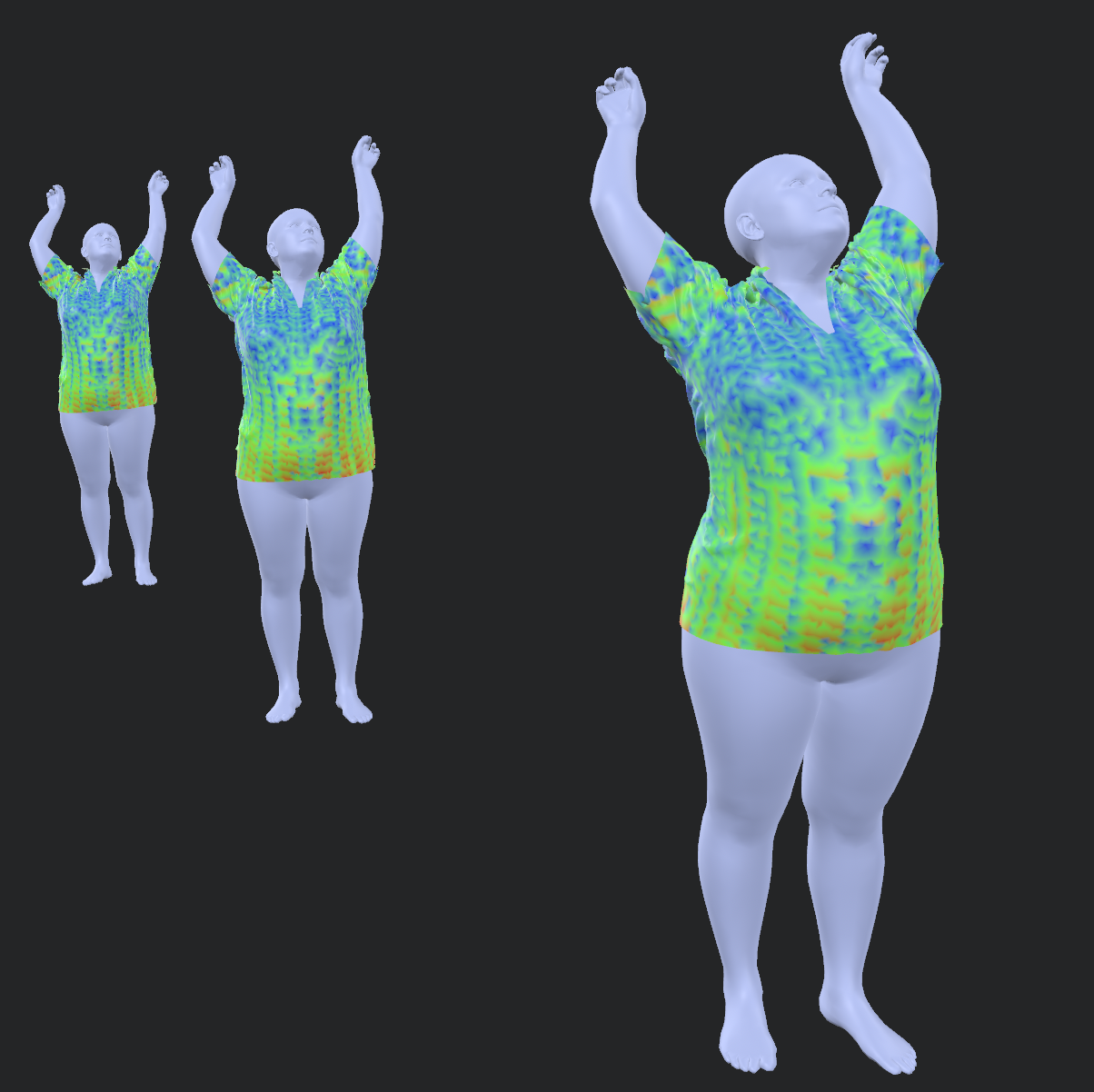
Physics-based simulation across a body distribution matched to your target customer, calibrated to your fit standards and fabric properties.
Diagnose
Per-size risk overview with strain and ease visualisation across critical functional zones — armholes, crotch, necklines, waistbands. The report flags which sizes are in spec and which need work.
Correct
Proposed corrected DXF geometry alongside the diagnostic. Not a black box, not a replacement for your pattern maker's judgment — a precise, physics-derived starting point that would otherwise take hours of manual iteration to reach.
Outcomes
Results you can measure.
After a Nabla Labs analysis, your pattern maker has concrete notes on where to adjust, not just a feeling that something is off. Your fit sessions focus on the two or three sizes that actually need physical review, not a blind check of the full run. Your operations team has a documented fit standard that travels across factories and seasons. And you go into production knowing your edge sizes behave the way your base size does.
Fewer grading-related sample rounds per style.
Better use of fit model time, focused on sizes flagged as high risk.
A documented grading standard that travels across factories and seasons.
An optional Fit Quality Score per style: a documented, repeatable internal KPI you can track season over season.
Works with your existing pattern maker, grader, factory, and CAD workflow. No 3D seat, no GPU workstation, no change to how your team designs or grades.
FAQ
Common questions
RequirementsWho is Nabla Labs for and what are the technical requirements?
Who is Nabla Labs for and what are the technical requirements?
IntegrationWhat is required to integrate Nabla Labs into my current process?
What is required to integrate Nabla Labs into my current process?
DifferentiationHow does this compare to 3D tools like CLO3D or Style3D?
How does this compare to 3D tools like CLO3D or Style3D?
PositioningHow is this different from Virtual Try-On (VTO) widgets?
How is this different from Virtual Try-On (VTO) widgets?
TechnologyDoes this rely on Generative AI for the simulations?
Does this rely on Generative AI for the simulations?
CategoriesWhich garment categories do you support?
Which garment categories do you support?
Body ModellingHow do you generate the bodies you simulate on?
How do you generate the bodies you simulate on?
MaterialsHow do you handle fabric physical properties?
How do you handle fabric physical properties?
If you manage grading or fit, this is built for that problem.
Early‑access participants get access to the tooling, feedback on their own styles, and influence on how the diagnostics evolve.
Pricing per style. Volume and early‑access rates on request.