Population‑aware grading: a methodology that solves pattern grading as a closed‑loop optimisation across a body distribution and a fabric specification — rather than applying pre-calibrated grade rules to a single representative mannequin.
How We Think About Sizing
Body standards were the breakthrough of the early 2000s. Body distributions are the next step.
This page describes how we approach the sizing and grading problem differently from traditional fit-standard methodology, and why those differences matter for brands hitting the limits of single‑mannequin work.
What body standards solved
Modern fit work was built on a real breakthrough: collecting large body-scan datasets, identifying representative shapes per demographic, and turning those shapes into reusable mannequins and size charts. Brands gained a documented fit identity. Suppliers gained a shared reference. Returns dropped. The methodology transformed an industry that previously had little data to work with.
Twenty-five years on, that methodology has reached its useful limits in three specific ways.
Three limits of single‑mannequin fit work
A demographic is a distribution, not a point.
Two bodies that share the same chest, waist, and hip measurements can have meaningfully different surface geometry. The same garment will drape differently on each. Methodology that compresses bodies to scalar measurements cannot see the residual shape variance, which is concentrated in the parts of the size range customers complain about most: extended sizes, athletic builds, regional differences.
Grading is an optimisation problem, not a rule application.
Traditional grading applies pre-calibrated rules to derive size XL from size M. Those rules are valid on average, across many garments, against an assumed body. They are not adapted to a specific style, a specific fabric, a specific brand fit identity, or a specific customer distribution. A rule that holds in aggregate can break for any individual style.
Fabric is part of fit, not a footnote.
Patterns drape differently on different fabrics. A grade rule calibrated for a stable woven will produce a different fit when applied to a stretch knit, a heavy denim, or a recycled blend. Methodology that holds fabric constant cannot adapt to the fabric variation that defines modern apparel, particularly in performance, denim, and sustainability-driven categories.
Population‑aware grading: where we extend the methodology
This is what we mean by population‑aware grading: pattern grading solved as a closed‑loop optimisation across a body distribution, not a rule application against a single mannequin. We ingest your existing body standards, your size charts, your fit identity — those are the priors we work from. We then:
Sample bodies across the distribution your standard represents, not just one mannequin per demographic.
Solve grading as a closed‑loop optimisation across that distribution, with your fabric properties as part of the input, not a constant.
Return corrected pattern geometry where grading needs adjustment, alongside the diagnostic that explains why.
You don't replace your body standard. You extend its reach. The methodology compounds: better priors from your existing fit work plus better inference from our engine produce a more reliable graded pattern set than either alone.
Body-Standard Methodology
Single Mannequin
One body per demographic
Static Grade Rule
Same rule regardless of fabric
Nabla's Population‑Aware Approach
Body Distribution
Hundreds of bodies per demographic
Optimization‑driven, Physics‑based Pattern Grading
Automatic optimization that refines the garment pattern Iteratively
Fabric‑Aware Input
Fabric properties enter the optimization directly
The Validation Engine
To execute this methodology at scale, we built a computational pipeline that operates entirely as a closed loop. It takes your existing assets, data and specs as inputs, simulates them mechanically across the target population, and iterates until the geometry is optimized for your specific fabric.
Input
Pattern + Fabric
DXF/CAD pattern set, fabric properties, body standard prior
Body Distribution
Population sampling
Bodies that represent your real customer variance
Closed‑Loop Simulation
Physics‑based solver
Iterative pattern + fabric optimization across the population
Optimized Pattern
Per‑size diagnostic + final DXF
Production-ready geometry, calibrated to your fabric
Integration
Designed to work with your current team.
Works with patterns from your existing grader, freelancer, or factory.
Produces factory-ready pattern files plus an additional fit report.
Gives technical designers and pattern makers concrete data on where grading breaks.
Helps fit models and fit technicians focus on problem sizes and problem zones instead of checking everything blindly.
Provides founders and product teams a clear view of sizing risk by style.
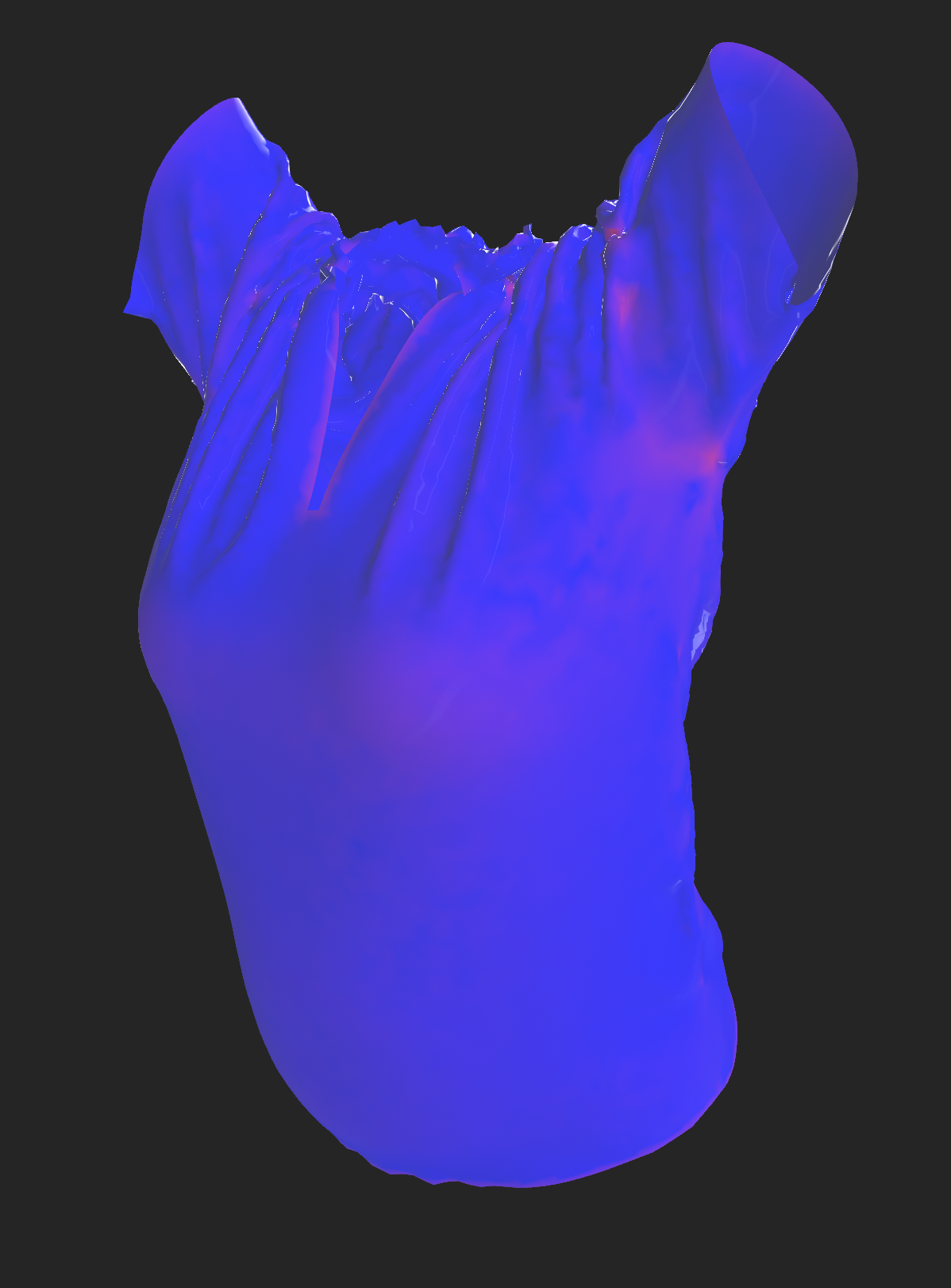
Grading Risk Overview
What this looks like in practice
A brand sends us their graded DXF/CAD pattern set for a style, for example a women's structured shirt across sizes XS–XXL plus a Plus 1X–3X extension. We take their existing fit-standard size chart as the calibration anchor. We sample 50 bodies across the population that standard represents, weighted toward the brand's known customer demographics. We simulate the graded patterns across all 50 bodies, in the relevant fabric. We return: a per-size fit‑risk summary, contact-and-strain visualisations on the most diagnostic bodies, and where grading needs to be tightened, a corrected pattern proposal.
The output is portable. The corrected pattern goes back into the brand's CAD workflow. The diagnostic supports the conversation between technical designer, pattern maker, and factory.
Our goal is to make sizing more accurate and more inclusive by giving the work the population‑aware foundation that single‑mannequin methodology can't provide on its own.
If you'd like a deeper technical conversation about how our methodology fits with your existing fit infrastructure, we run a 30-minute walkthrough on request.
Request a walkthrough